

Alright, let’s cut to the chase—if you’ve ever dug into how a refrigeration system actually works beyond the “it cools your fridge” surface level, you’ve probably heard the term “vacuum pump” thrown around. Maybe you’re a tech getting your hands dirty on commercial HVAC units, a facilities manager troubleshooting a walk-in cooler that won’t hold temp, or even someone just curious why those shiny little pump units are so important. Let’s break this down straight, no jargon overload, plus I’ll drop in some actual stuff from our shop since we’re a vacuum pump supplier, not just a bunch of textbook writers.
First off, let’s forget the basic “it pulls air out” take—though that’s part of it. Refrigeration systems run on a closed loop, right? Compressor, condenser, expansion valve, evaporator all chained together with refrigerant flowing through tubing. For that loop to do its job without breaking, it can’t have any moisture, non-condensable gases (air, nitrogen, that stuff), or leftover debris in there. Ever had a fridge that started making weird noises or stopped cooling because it was “overworked”? Chances are the initial setup missed a step where a vacuum pump should’ve been used, or the wrong pump was picked. That’s where we come in, because picking the right vacuum equipment isn’t one-size-fits-all.
Let’s start with the big-picture purpose, not just a bullet point. A refrigeration system’s refrigerant relies on it evaporating at a low pressure to suck heat out of the space (like inside your freezer). If there’s air in the system, that’s a non-condensable gas—meaning it won’t turn back into a liquid like refrigerant does when it hits the condenser. Those air bubbles take up space in the condenser, so the refrigerant can’t condense properly. That makes the compressor work way harder, uses more energy, and eventually shortens its life. Moisture is even worse: at low pressures, that water boils into steam, which also clogs lines and mixes with refrigerant to create corrosive acids that eat away at metal parts. Debris? That’s from when the system is assembled—metal shavings, pipe sealant, dust from the shop. Vacuum pulls all that junk out so it doesn’t gunk up the expansion valve, which is like the system’s tiny control tap.
Now, here’s where our expertise comes in—because not all vacuum pumps are cut out for refrigeration work. Let’s talk about the steps you actually use a vacuum pump for in refrigeration: first, evacuation. When you’re installing a new system, or rebuilding an old one, you first open up the lines, so air gets in. You need to pull a deep enough vacuum to get rid of that air, then hold that vacuum to make sure there are no leaks (if the pressure creeps up after an hour, you’ve got a leak somewhere). Then, you need to pull a vacuum that’s low enough to boil out moisture—water boils at room temperature when pressure is low enough, right? So pulling a deep vacuum turns any trapped water into vapor, which the pump sucks out, not just the air.
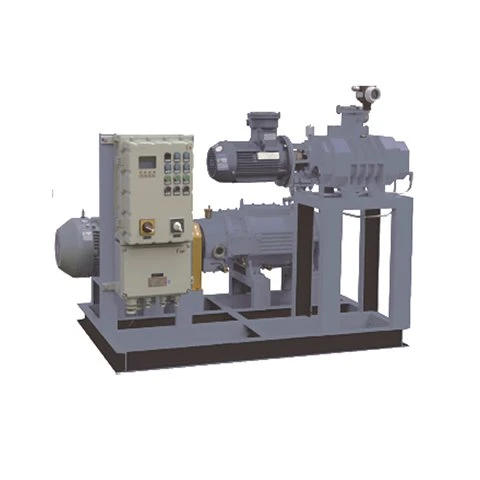
Let’s get specific on the pumps we sell, since they’re built for this exact task. For smaller jobs, like residential HVAC or small walk-in coolers, maybe a Skid-mounted Vane Vacuum Unit is perfect—easy to move around a job site, compact, and gets the deep vacuum you need without overkill. We’ve had techs tell us these are their go-to because they don’t have to mess with bulky equipment in tight crawl spaces or between kitchen appliances. But if you’re working on bigger stuff—like a supermarket refrigeration system with multiple display cases, or industrial cold storage—you need more power. That’s where a Roots-Screw Vacuum Unit comes in, it can pull a deeper vacuum faster, which cuts down on job time (time is money, right?) and ensures you’re not leaving any moisture behind.
Wait, let’s clear up a common mistake a lot of new techs make: using a regular air compressor or a cheap pump meant for tire inflation for refrigeration evacuation. Those don’t pull a deep enough vacuum—they can’t get rid of that last bit of moisture or tiny air bubbles, which leads to big problems down the line. We’ve had customers reach out after that: “My new cooler started leaking 6 months in, turns out the old pump I used didn’t get all the moisture.” That’s why picking the right vacuum pump for refrigeration isn’t just a convenience—it’s a preventive measure that saves you from costly callbacks.
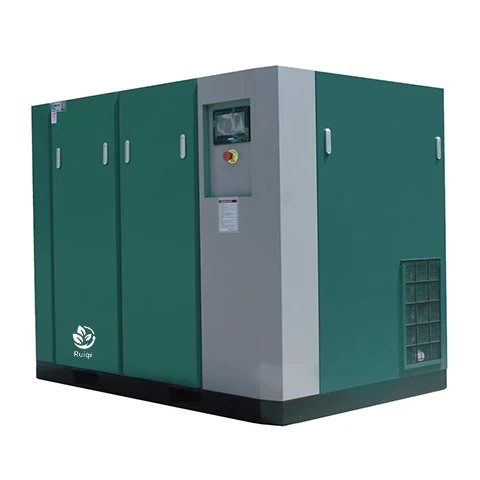
Another thing: recovery and recharge? Wait, no, vacuum is mostly for setup and maintenance. When you’re servicing a system, you might evacuate it before adding new refrigerant to make sure the old refrigerant and any contaminants are pulled out. Some of our clients use a PM VFD Screw Vacuum Pump for this because the variable frequency drive lets them adjust the speed—so if they’re working on a tiny window AC unit, they can run it slow to avoid sputtering refrigerant lines, and bump it up for big industrial jobs. That flexibility is huge, especially when you’re bouncing between job sites with different equipment sizes.
Let’s talk about why this isn’t just “evacuation 101.” Refrigerant types matter too. For example, newer refrigerants like R-32 or HFO blends have different properties—they work best at very specific low pressures. If there’s any residual gas or moisture, that changes the pressure balance, so the refrigerant doesn’t perform as it should. We’ve seen systems with R-32 that were underperforming because a tech used a pump that couldn’t pull the required vacuum, so they had to come back and redo the whole evacuation. That’s a waste of time and money, which is exactly what we’re here to help avoid.
Now, let’s get real about what we do as a supplier. We don’t just sell pumps—we work with HVAC techs, refrigeration service companies, and facility managers to figure out which vacuum equipment fits their needs. Like, if you’re a small contractor who only does residential work, we’ll point you to the Skid-mounted Vane Vacuum Unit. If you’re an industrial service team that needs to pull vacuum on massive cold storage systems, we’ll hook you up with a Roots Screw Vacuum Pump that’s built for high-volume, deep-vacuum work. We also have Dry Screw Vacuum Pump options for applications where oil contamination is a concern—some facilities can’t have oil getting into the refrigerant lines, so our dry screw pumps eliminate that risk, no oil to mess up the system.
Wait, let’s touch on holding the vacuum— that’s a critical step no one skips, but a lot of new techs don’t do right. After you pull the vacuum, you close the valve and let the system sit for 30 to 60 minutes. If the pressure goes up more than a tiny amount (like 1-2 microns), you’ve got a leak. Our pumps are built to maintain that consistent deep vacuum, so you can trust the pressure readings—no guessing if the pump is the problem or the system is leaking. That peace of mind is worth its weight in gold when you’re on a job and don’t want to come back.
Let’s address a myth I hear all the time: “I can just blow out the lines with compressed air instead of using a vacuum pump.” No, that’s a terrible idea. Compressed air has moisture in it (even if you think it’s dry), and it forces contaminants deeper into the system, not out. A vacuum pulls everything out by creating pressure differential—so anything that’s loose (air, moisture, debris) gets sucked out, not pushed around. We’ve had too many stories of systems that were “blown out” and failed within a year because of that leftover moisture. Don’t do it.
What about energy efficiency? These days, everyone’s trying to cut energy costs, and a properly evacuated refrigeration system is way more efficient. If there’s no air or moisture, the compressor doesn’t have to work overtime, so it uses less electricity. Our pumps, especially the ones with VFD (like the PM VFD Screw Vacuum Pump), are designed to be energy-efficient too—they don’t waste power pulling more vacuum than you need, so you’re saving on your utility bills and your pump’s operating costs. That’s a double win for your bottom line.
Now, let’s wrap this up with the point that matters most for our business: if you’re working on refrigeration systems and you’re not sure if your vacuum pump is up to snuff, or you need something that fits your specific job size, reach out. We don’t do one-size-fits-all sales—we take the time to understand your work, whether you’re doing service calls on home fridges or maintaining a whole warehouse’s cold storage. We’ve got the equipment listed here, like the Roots-Screw Vacuum Unit, PM VFD Screw Vacuum Pump, and more, all built for the unique demands of refrigeration system evacuation. We’re not just a vacuum pump supplier—we’re the people who know this stuff inside and out, so you don’t have to guess.
Let’s make this clear: skipping or cutting corners on the vacuum pump step is the #1 reason refrigeration systems fail early, use too much energy, and cost you extra money. Investing in the right vacuum equipment isn’t an expense—it’s a long-term investment that saves you callbacks, reduces energy costs, and keeps your systems running smoothly. If you’re tired of dealing with systems that won’t cool right or wasting time on bad equipment, let’s talk. We can help you pick the right pump or unit for your needs, no hassle, no jargon, just straight answers and solid gear.
References
ASHRAE Handbook: HVAC Systems and Equipment (2022)
Ulrich, G. D. (2019). Fundamentals of Modern Vacuum Technology for HVAC-R Applications. International Journal of Refrigeration
“Proper Evacuation Practices for Commercial Refrigeration Systems.” Air Conditioning Contractors of America (ACCA) Technical Bulletin, 2021


